
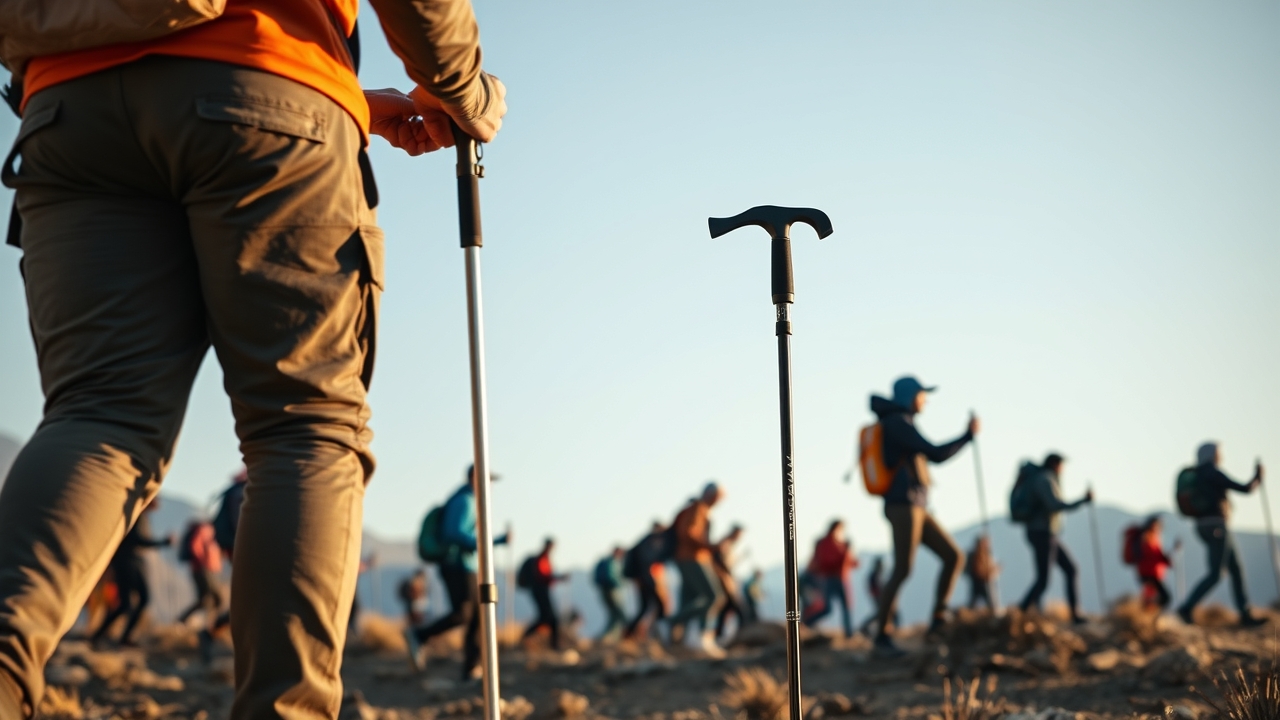
The Unseen Ally: How Trekking Poles Revolutionize Knee Health on the Trail
For millennia, the human body has been navigating diverse terrains, driven by an innate urge to explore. Yet, the very act of trekking, especially over challenging landscapes and extended periods, imposes significant stress on our joints, with the knees often bearing the brunt of the impact. The repetitive pounding, particularly during descents, can lead to discomfort, fatigue, and, over time, chronic conditions that limit our ability to enjoy the trails we love. It’s a silent struggle many outdoor enthusiasts face, often viewing knee pain as an unavoidable consequence of their passion.
However, what if there was a simple, yet profoundly effective, tool that could dramatically mitigate this stress, enhance your performance, and safeguard your knee health for years to come? Enter trekking poles – often underestimated, sometimes dismissed as an accessory for the “unfit” or “elderly,” but in reality, an indispensable piece of gear for any serious trekker or hiker, regardless of age or fitness level. This comprehensive guide, informed by biomechanical principles and practical experience, will illuminate the myriad benefits of incorporating trekking poles into your adventures, with a specific, expert focus on their unparalleled contribution to knee preservation and overall joint well-being.
Prepare to delve deep into the science and practical application behind these simple tools, understanding how they transform your body’s interaction with the trail, turning potential knee pain into enduring comfort and extending your trekking horizons indefinitely.
Understanding the Burden: Why Knees Are Vulnerable on the Trail
Before we fully appreciate the solution, it’s crucial to understand the problem. The human knee is a complex marvel of engineering, designed for mobility and load-bearing. However, it’s also highly susceptible to the unique stresses of trekking. Each step taken on uneven ground, especially with a pack, involves a intricate dance of muscles, ligaments, and cartilage. The impact forces generated, particularly during downhill sections, can be several times your body weight.
During a typical hike, your knees are subjected to a combination of forces:
- Repetitive Impact: Thousands of steps translate to thousands of micro-impacts that cumulatively stress cartilage and menisci.
- Eccentric Loading: This occurs when muscles lengthen under tension, such as when your quadriceps contract to control your descent. It’s a highly efficient way to generate force but also a significant contributor to muscle soreness (Delayed Onset Muscle Soreness or DOMS) and can place immense strain on the patellofemoral joint (the joint behind your kneecap).
- Shear Forces: Uneven terrain, side-sloping trails, or sudden changes in direction can introduce shear forces that strain ligaments like the Anterior Cruciate Ligament (ACL) and Posterior Cruciate Ligament (PCL).
- Rotational Stress: Twisting motions, common when navigating rocks or roots, can put the menisci at risk.
- Cumulative Fatigue: As muscles tire, their ability to stabilize the knee diminishes, leading to compromised biomechanics and increased susceptibility to injury.
These stresses contribute to common trekking-related knee issues such as patellofemoral pain syndrome (“runner’s knee”), iliotibial band (ITB) syndrome, chondromalacia patella, meniscal tears, and accelerated cartilage degeneration, which can pave the way for osteoarthritis over time. It’s a sobering reality, but one that trekking poles are uniquely positioned to address.
The Core Mechanism: How Trekking Poles Alleviate Knee Stress
Trekking poles work by transforming your two-legged locomotion into a more stable and efficient four-point contact system. This fundamental shift in gait mechanics yields profound benefits for your knees, distributing workload, enhancing stability, and promoting optimal biomechanics.
1. Significant Load Reduction: Distributing the Impact
This is arguably the most critical benefit for knee health. When you use trekking poles correctly, you effectively transfer a significant portion of your body weight and pack weight from your lower limbs to your upper body and core. Think of each pole plant as a momentary assist, lessening the burden on your knees, ankles, and hips with every step.
Numerous studies have quantified this effect. Research indicates that trekking poles can reduce the compressive force on the knees by as much as 25% to 30%, particularly during downhill descents. This reduction is monumental. During a long descent, where each step can generate impact forces equivalent to several times your body weight, offloading even a quarter of that force translates to thousands of pounds of stress saved over the course of a day. This means:
- Reduced Impact on Descents: Downhill trekking is notoriously hard on the knees due to the constant eccentric loading of the quadriceps and the high impact forces. Poles allow you to “brake” with your arms, taking strain off your knees and reducing the jarring impact.
- Decreased Eccentric Muscle Contraction: By engaging your arms and shoulders, your quadriceps don’t have to work as hard to control your descent, delaying fatigue and reducing the stress on your patellar tendon and patellofemoral joint. This directly combats patellofemoral pain syndrome.
- Preservation of Cartilage: Less direct impact and reduced shear forces mean less wear and tear on the articular cartilage cushioning your joints. This is a crucial factor in preventing or slowing the progression of degenerative conditions like osteoarthritis.
- Lower Back and Hip Relief: The benefits aren’t confined solely to the knees. By distributing the load, poles also reduce strain on your hips and lower back, creating a more comfortable and sustainable trekking experience overall.
This load reduction isn’t just about comfort; it’s about active prevention of micro-trauma and cumulative damage that, over years, can lead to debilitating joint issues. Trekking poles effectively lengthen the healthy lifespan of your knees.
2. Enhanced Stability and Balance: Your Four-Point Stance
Picture a tightrope walker with a balancing pole. Now imagine a trekker on a slippery, rocky trail. The principle is the same. Trekking poles provide two additional points of contact with the ground, creating a significantly wider and more stable base of support. This “four-point stance” dramatically improves your balance and stability, especially on challenging terrain.
The implications for knee health are profound:
- Fall Prevention: A slip or fall can result in catastrophic knee injuries, from ligament tears (like the dreaded ACL or PCL injury) to fractures. Poles act as an immediate brace, catching you before you lose your footing completely. They are particularly invaluable on slippery surfaces (mud, ice, wet rocks), loose scree, and unstable river crossings.
- Improved Proprioception: Proprioception is your body’s sense of its position in space. Poles enhance this by providing constant tactile feedback from the ground, allowing your brain to better anticipate and react to changes in terrain. This leads to more confident and controlled foot placement, reducing awkward steps that can twist or strain the knee.
- Navigation of Challenging Terrain: When faced with steep ascents, precarious descents, or large steps over obstacles, poles act as extensions of your limbs, allowing you to probe the ground, test stability, and provide leverage. This prevents uncontrolled movements that can overextend or twist the knee.
- Reduced Ankle and Foot Strain: By improving overall balance, poles also reduce the likelihood of ankle sprains. Ankle stability is directly linked to knee stability; an injured ankle can lead to compensatory gait changes that place undue stress on the knee.
The psychological benefit of enhanced stability is also noteworthy. Trekkers often report feeling more confident and less fatigued when navigating tricky sections, knowing they have a reliable backup for balance. This confidence translates into a more relaxed gait and less tension in the joints.
3. Improved Posture and Ergonomics: A Straighter Path to Comfort
Without poles, many trekkers tend to hunch forward, especially when carrying a heavy pack or when fatigued. This forward lean alters the body’s center of gravity, increasing strain on the lower back, hips, and knees. It can also lead to a less efficient gait and compromised breathing.
Trekking poles encourage a more upright and natural posture. When properly adjusted and used, they help maintain a straight back and open chest, which has several indirect but significant benefits for knee health:
- Spinal Alignment: An upright posture reduces strain on the spinal column, preventing a cascade of compensatory movements that can throw off the alignment of the hips and knees. Misalignment in the kinetic chain can lead to uneven load distribution and increased stress on one side of the knee joint.
- Reduced Back Strain: By engaging the core and upper body to support an upright stance, poles significantly reduce the workload on the lower back. This prevents fatigue that might otherwise lead to slouching and poor knee tracking.
- Optimized Gait Mechanics: With better posture, your natural stride length and rhythm improve. This promotes a more efficient and less stressful gait for your knees, reducing lateral sway and promoting proper patellar tracking.
- Enhanced Respiration: An open chest cavity allows for deeper, more efficient breathing, which improves oxygen delivery to working muscles and delays fatigue, further contributing to maintained good form and knee protection.
Essentially, poles help you walk “taller,” allowing your body to function more harmoniously and reducing the cumulative stresses that contribute to knee discomfort and injury.
4. Boosted Endurance and Reduced Fatigue: Go Further, Feel Better
Trekking is an endurance activity, and fatigue is a primary precursor to injury. As muscles tire, their ability to stabilize joints and maintain proper form diminishes, leading to sloppy movements and increased risk of strains or falls. Trekking poles are highly effective at delaying the onset of this fatigue.
Here’s how they contribute to greater endurance and less fatigue:
- Energy Conservation: By recruiting upper body muscles (shoulders, triceps, chest, core) to assist in propulsion and braking, poles redistribute the muscular workload. Instead of relying solely on your legs, you engage a larger muscle group, spreading the effort and reducing the demand on any single muscle group. This is akin to a cross-training effect while you hike.
- Delayed Muscle Fatigue: Specifically, the quadriceps and hamstrings, which are crucial for knee stability and power, experience reduced fatigue. This means they can maintain their protective function for longer, reducing the risk of fatigue-induced injuries. You’ll feel less of that burning sensation in your thighs on a long descent. They also reduce the severity of DOMS post-trek.
- Increased Overall Trekking Distance: With less fatigue and better energy management, you can comfortably cover greater distances or tackle more challenging ascents and descents. This isn’t just about performance; it means more time enjoying the outdoors without the limiting factor of exhausted, painful knees.
- Improved Rhythm and Pacing: Poles can help establish a consistent walking rhythm, which is inherently more efficient. This steady cadence conserves energy and allows for a more fluid and less jarring motion, further protecting your knees from inconsistent impacts.
Think of trekking poles as an additional set of shock absorbers and propulsion systems. They allow your body to operate more efficiently, extending your capabilities and significantly reducing the post-trek recovery time for your knee joints.
5. Long-Term Joint Health and Injury Prevention: An Investment in Your Future
Synthesizing all the above points, the most compelling argument for trekking poles is their role as a preventative measure for long-term knee health. Trekking is a lifelong passion for many, but chronic knee pain or degenerative conditions can prematurely end an outdoor career. Trekking poles are a sound investment in your future ability to hit the trails.
Consistent use of trekking poles helps to:
- Protection Against Degenerative Joint Disease: By continually reducing impact forces and shear stress, poles significantly slow down the wear and tear on articular cartilage and menisci. This directly combats the development and progression of conditions like osteoarthritis, which is essentially the breakdown of joint cartilage.
- Reduced Risk of Repetitive Stress Injuries: Conditions such as patellofemoral pain syndrome, ITB syndrome, and various forms of tendonitis (e.g., patellar tendonitis) are often a result of repetitive stress and overuse. Poles alleviate this stress, allowing the body’s tissues to recover more effectively between trekking sessions.
- Extended Trekking Career: For those who wish to trek well into their later years, preserving joint health is paramount. Poles enable individuals to maintain their activity levels longer, enjoying the physical and mental benefits of being outdoors without debilitating pain. They are not a crutch for those with existing problems, but a proactive tool to prevent them.
- Mitigation of Pre-Existing Conditions: For trekkers who already have mild knee issues or are recovering from past injuries, poles offer crucial support, allowing them to continue their activity safely and comfortably, often preventing exacerbation of their condition.
Consider your knees as having a finite amount of “joint capital.” Every high-impact step draws from that capital. Trekking poles effectively reduce the rate of withdrawal, ensuring your capital lasts much longer. They are a proactive rather than reactive solution to knee pain, allowing you to enjoy the trails without consequence.
Beyond Knee Benefits: A Holistic Advantage
While this article primarily focuses on knee health, it’s worth briefly noting that the benefits of trekking poles extend far beyond your lower limbs:
- Upper Body Workout: They engage your arms, shoulders, and core, providing a gentle yet effective full-body workout.
- River Crossings: They offer essential stability and depth perception in moving water.
- Self-Defense: In rare situations, they can serve as a deterrent.
- Testing Terrain: Probe mud, snow depth, or loose rocks before committing your full weight.
- Emergency Use: Can be used to pitch a lightweight shelter, splint an injury, or retrieve dropped items.
These additional advantages underscore their versatility and value as an all-encompassing trekking tool.
Choosing the Right Trekking Poles: A Guide to Informed Selection
To fully reap the benefits, selecting the right trekking poles for your needs is crucial. Considerations include material, adjustment mechanism, grip, and accessories.
1. Material Matters: Durability vs. Weight
- Aluminum: Generally more durable and resilient to bending or breaking than carbon fiber. They are a good choice for beginners, those on a budget, or trekkers who put their gear through rigorous conditions. The downside is they are typically heavier.
- Carbon Fiber: Significantly lighter, which can reduce swing weight and overall fatigue over long distances. However, they are more expensive and more prone to snapping or shattering under extreme impact compared to aluminum, which might bend instead. Ideal for gram-counting backpackers or those prioritizing minimal weight.
2. Adjustment Mechanisms: Ease and Reliability
Most trekking poles are adjustable in length, allowing you to fine-tune them for different terrains and body heights.
- Lever Locks (Flick Locks): These external clamp-style locks are generally preferred for their ease of use, even with gloves, and reliability. They are quick to adjust and less prone to freezing or slipping in wet conditions.
- Twist Locks (Internal Mechanisms): These work by twisting the pole sections to expand an internal wedge. They can be lighter and offer a sleeker profile but can be more challenging to operate with cold hands or gloves and may occasionally slip or seize up if dirt or moisture gets inside.
3. Grip Comfort: Your Connection to the Pole
The material and ergonomics of the grip are vital for comfort and blister prevention.
- Cork: Molds to your hand over time, provides excellent sweat-wicking properties, and offers a comfortable, non-slip feel, especially in warm weather. Often considered the premium option.
- Foam: Soft, lightweight, and absorbs sweat well. It’s comfortable but can be less durable than cork or rubber over extended use.
- Rubber: Durable, offers good insulation in cold weather, and provides a firm grip. However, it can cause sweaty hands in warmer conditions.
4. Straps and Baskets: Essential Accessories
- Wrist Straps: Often overlooked, but critical for proper technique. They transfer weight from your hands to your wrists, reducing grip fatigue and allowing you to maintain a light grip on the pole. Ensure they are comfortable, adjustable, and don’t chafe.
- Baskets: Small, removable discs near the tip.
- Small Baskets: Standard for most trekking, preventing the pole from sinking too deep into soft earth or getting jammed between rocks.
- Large/Snow Baskets: Essential for snowshoeing or winter trekking, providing flotation in deep snow.
5. Fixed vs. Adjustable Length: Versatility for Different Terrains
- Adjustable Poles: The most common and recommended type. They allow you to vary the length for uphill (shorter), downhill (longer), and flat terrain, optimizing their benefits for knee health and overall efficiency. Most collapse for easy storage.
- Fixed-Length Poles: Lighter and sometimes more robust than adjustable poles, as they have fewer moving parts. However, they lack versatility and are only suitable if you consistently trek on specific terrain or prioritize absolute minimal weight.
Mastering Proper Pole Technique: Maximizing the Benefits
Owning trekking poles is only half the battle; knowing how to use them effectively is the other. Proper technique ensures you maximize their knee-protecting benefits and overall efficiency.
1. Correct Pole Sizing: The Foundation of Efficiency
The ideal length of your trekking poles varies slightly with terrain, but a good starting point is to adjust them so that when you stand upright with the pole tips on the ground next to your feet, your elbows form a 90-degree angle. This is your baseline for flat or gently rolling terrain.
- Uphill: Shorten your poles by about 5-10 cm. This allows you to plant them closer to your body and leverage your upper body for propulsion, pushing off the poles with more power.
- Downhill: Lengthen your poles by about 5-10 cm. This allows you to plant them further ahead, absorbing impact and providing stability without having to stoop too much.
2. The Rhythmic Gait: Syncing Poles with Steps
The most natural and efficient way to use poles is in a cross-body rhythm, similar to how your arms naturally swing when walking. As your left foot steps forward, your right arm (and pole) moves forward, and vice-versa. This creates a natural, balanced rhythm and distributes the workload symmetrically.
- Pole Placement: Plant the pole tips just ahead of your forward foot. Don’t plant them too far out in front, as this can strain your shoulders and disrupt your balance.
- Light Grip, Strong Push: Don’t death-grip the poles. Rely on the wrist straps to take the bulk of the weight. Your hands should simply guide the poles and provide a light grip for control. Push down through the straps as you propel yourself forward or brace yourself.
3. Uphill and Downhill Strategy: Adapting to the Terrain
- Uphill: Shorten your poles, plant them firmly, and use your arm and shoulder strength to push off, assisting your leg muscles. This helps maintain momentum and reduce the strain on your quadriceps and glutes.
- Downhill: Lengthen your poles, plant them a bit further ahead, and use them to absorb impact. As your foot lands, allow your arms to slightly bend, acting as shock absorbers. This significantly reduces the jarring force on your knees and allows you to maintain control on steep descents. It also provides a critical point of stability, preventing slips.
4. Effective Strap Use: More Than Just a Safety Feature
Many beginners misuse trekking pole straps. The correct method is to bring your hand up through the bottom of the strap loop, then grip the pole handle along with the strap. This way, the strap supports your wrist, allowing you to push down through the strap without needing to tightly grip the pole. This prevents hand fatigue, blisters, and allows for better power transfer from your arm and shoulder, directly translating to more effective knee load reduction.
Debunking Common Misconceptions About Trekking Poles
Despite their undeniable benefits, trekking poles still face some unfounded criticisms and misconceptions:
- “They’re only for old people or injured people.” This is perhaps the most common misconception. While poles certainly assist those with mobility challenges, their primary role is preventative and performance-enhancing for trekkers of all ages and fitness levels. Elite athletes and experienced mountaineers routinely use them for efficiency and safety.
- “They slow you down.” Quite the opposite. By improving stability, reducing fatigue, and allowing for a more consistent rhythm, poles often enable trekkers to maintain a faster pace over longer distances and through challenging terrain. They turn stumbling blocks into stepping stones.
- “They’re just extra weight.” While they do add a small amount of weight to your pack (or in your hands), the benefits of load reduction, stability, and energy conservation far outweigh this minimal addition. For many, they pay for themselves many times over in saved energy and reduced knee pain.
- “They’re difficult to use.” While there’s a learning curve, proper technique is intuitive and quickly mastered. A few hours on the trail with deliberate practice is usually enough to feel comfortable and experience the benefits.
- “I need my hands free.” For very technical scrambling where you need to grip rocks, poles can be a hindrance. In such cases, they can be collapsed and stowed on a pack. However, for the vast majority of trekking, having two additional points of contact significantly enhances safety and efficiency.
Frequently Asked Questions (FAQ)
Q: Are trekking poles only beneficial for downhill trekking?
A: While the benefits for downhill knee stress reduction are particularly significant, trekking poles offer advantages across all terrains. Uphill, they provide propulsion and reduce muscle strain. On flat ground, they enhance rhythm, balance, and engage your upper body, contributing to overall energy conservation and stability. They are a comprehensive tool for any part of your trek.
Q: Can I just use one trekking pole?
A: While using one pole is better than none for basic balance and occasional support, two poles provide a symmetrical and balanced load distribution. This even distribution of forces across both sides of your body is critical for optimal knee protection and maintaining a natural gait. Using a single pole can sometimes lead to uneven muscle engagement and potential compensatory strain on one side of your body. For maximum knee benefit, two poles are highly recommended.
Q: Will using trekking poles make my leg muscles weaker?
A: No, this is a common misconception. Trekking poles redistribute the workload, they don’t eliminate it. By engaging your upper body and core, they allow your leg muscles to work more efficiently and for longer durations without reaching exhaustion. This means you can hike further and maintain better form, potentially leading to greater overall fitness and endurance, rather than muscle weakness. They allow for sustained, rather than reduced, activity.
Q: What is the ideal length for trekking poles?
A: On flat ground, when holding the poles with the tips touching the ground near your feet, your elbows should form approximately a 90-degree angle. Most adjustable poles have markings to help you find this sweet spot. Remember to adjust them slightly shorter for uphill sections and slightly longer for downhill sections to optimize leverage and shock absorption for your knees.
Q: When should I start using trekking poles?
A: Ideally, you should start using trekking poles before you experience knee pain or instability. They are a preventative tool, designed to safeguard your joints against cumulative stress. Starting early allows you to develop proper technique and establish beneficial habits that will protect your knees for countless treks to come. Don’t wait until you have a problem; use them as an investment in your long-term joint health.
Q: Are trekking poles suitable for all types of terrain?
A: Generally, yes. Trekking poles are excellent on uneven trails, steep ascents and descents, loose scree, mud, snow, and during river crossings. They provide crucial stability and support in these challenging environments. For highly technical scrambling or rock climbing sections where you need both hands free to grip, poles can be collapsed and stowed on your pack temporarily. For the vast majority of trekking scenarios, they are a significant asset.
Conclusion: Invest in Your Journey, Invest in Your Knees
The evidence is overwhelming: trekking poles are not a crutch, but a sophisticated, scientifically-backed tool that offers unparalleled benefits for knee health. They transform the biomechanics of trekking, significantly reducing impact forces, enhancing stability, promoting better posture, delaying fatigue, and ultimately, protecting your precious joint capital for the long haul.
From the seasoned mountaineer tackling high-altitude expeditions to the casual day-hiker enjoying a local trail, the advantages are universal. By incorporating trekking poles into your gear, you’re not just buying a piece of equipment; you’re making a proactive investment in your comfort, safety, performance, and the longevity of your trekking adventures. Embrace this simple yet profound innovation, and let your knees thank you for every step of the journey ahead.
Ready to Optimize Your Trekking Experience?
Subscribe, Follow, Like, Share, and Comment to join our community of passionate trekkers! Discover more expert insights and practical tips for your next adventure.
Recommended Reads:
- Choosing the Perfect Hiking Boots for Ultimate Comfort and Support
- Essential Hydration Strategies for Long-Distance Treks
- Mastering Backcountry Navigation: Fundamentals for Every Explorer
Discover more from Does Fansly Show Up As Fansly On Credit Card Statement
Subscribe to get the latest posts sent to your email.